Solve complex structural classification and prediction problems using multi-layer artificial intelligence networks. We design and train deep Convolutional Neural Networks (CNNs) for vision-based quality diagnostics and transformer models for semantic sequence parsing.
Our deep learning architectures ingest high-dimensional vector datasets, optimize neuron activation weights, and compile inference steps into low-latency executable structures. For clinical contexts, we train medical scan classifiers that flag anomalous tissue structures with verified statistical attribution. By pruning dense layer nodes, we reduce parameter sizing, ensuring these models run directly on localized hospital gateway hardware without cloud latency or security risk.
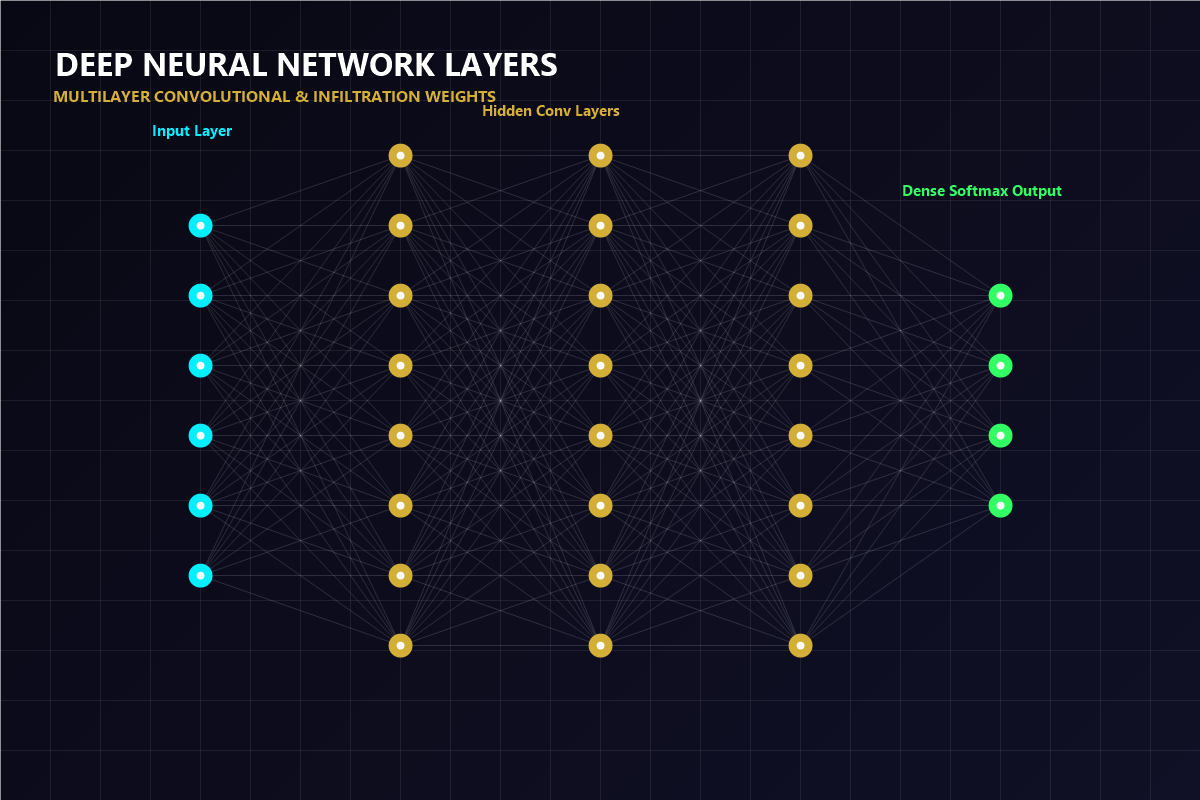
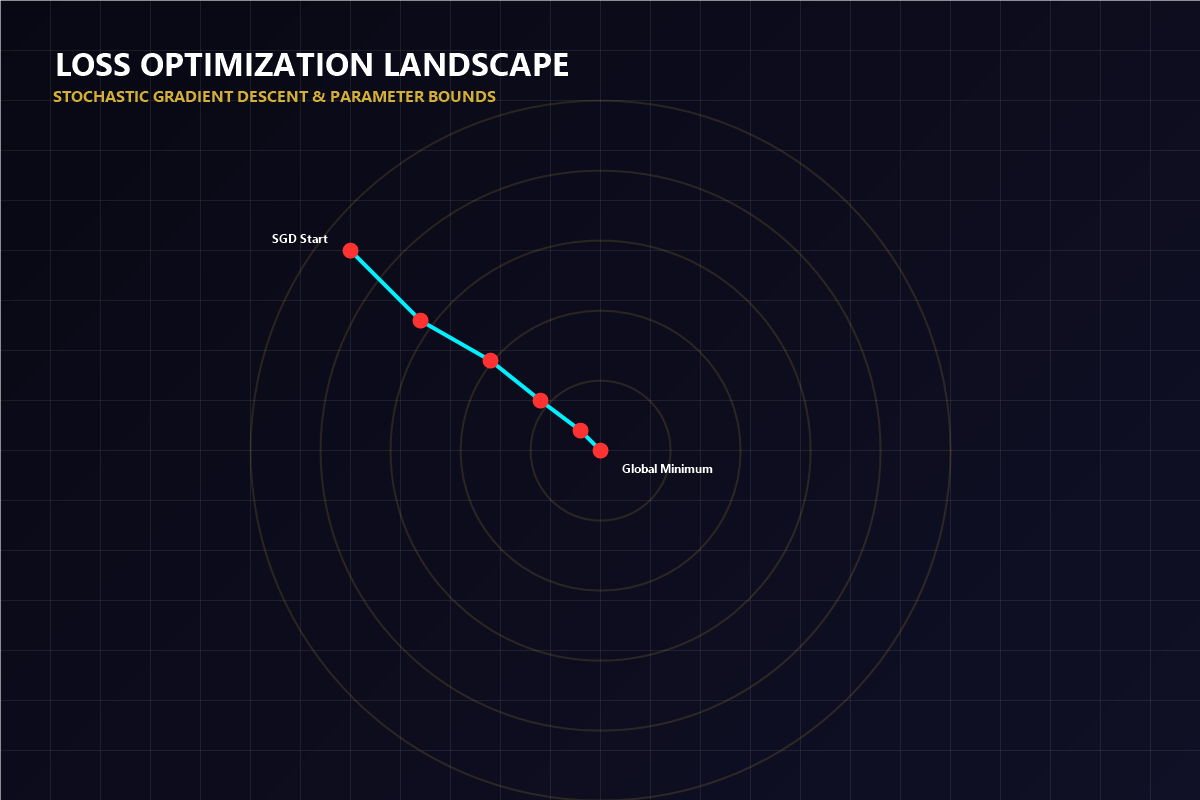
Achieving deep model convergence requires structured parameter scaling and loss function optimizations.
Structuring training datasets, applying scaling transformations and vector normalizing to enrich sample distributions.
Drafting neuron layout columns, mapping hidden pooling nodes, and setting starting parameter distributions to prevent vanishing gradients.
Executing stochastic gradient descent (SGD) or Adam optimization steps to drop parameters down to the absolute global loss minimum.
Compressing floating parameters to lower bit values, compiling code to run on local mechatronics boards with zero latency.
We build compressed, explainable network weights designed to deploy cleanly into secure client ecosystems.
Tuning descent step thresholds dynamically during model training, ensuring parameter nodes settle precisely in global loss minimums.
Setting up layered visual filters to scan diagnostic images, categorizing defect vectors automatically on assembly conveyor lines.
Normalizing input database columns to feed neural inputs, maintaining structural scaling parameters to prevent biased validation steps.
Training model routing agents inside simulated environments to verify output stability before executing live API configurations.
Converting heavy floating weights to smaller bit integer values, trimming neural file size to fit inside edge gateway processors.
Re-routing pre-trained network parameters onto custom datasets, reducing overall training cycles and operational electricity draw.
Consult with our senior mechatronics and deep learning engineers to draft your model architectures.
Speak to deep learning specialists