Anticipating market fluctuations, operational spikes, and mechanical degradation is key to enterprise adaptability. We engineer custom predictive models that ingest historical time-series datasets and capture anomalies dynamically.
Whether you are scheduling power distributions in regional electrical grids or tracking high-frequency motor bearing wear on heavy manufacturing floors, our forecasting systems calculate confidence intervals and risk boundaries. By leveraging pruned parameter architectures, we process massive input batches with minimal compute overhead, avoiding high cloud server bills while maintaining 98%+ forecasting precision.
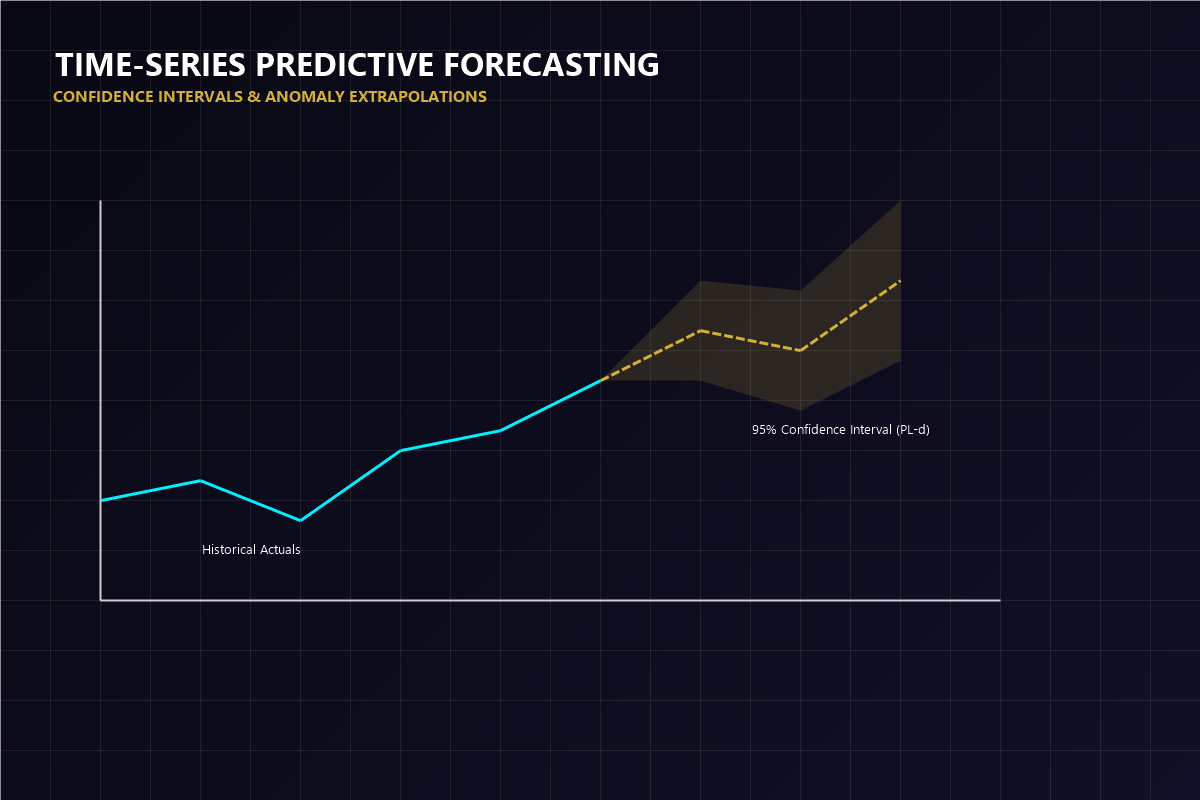
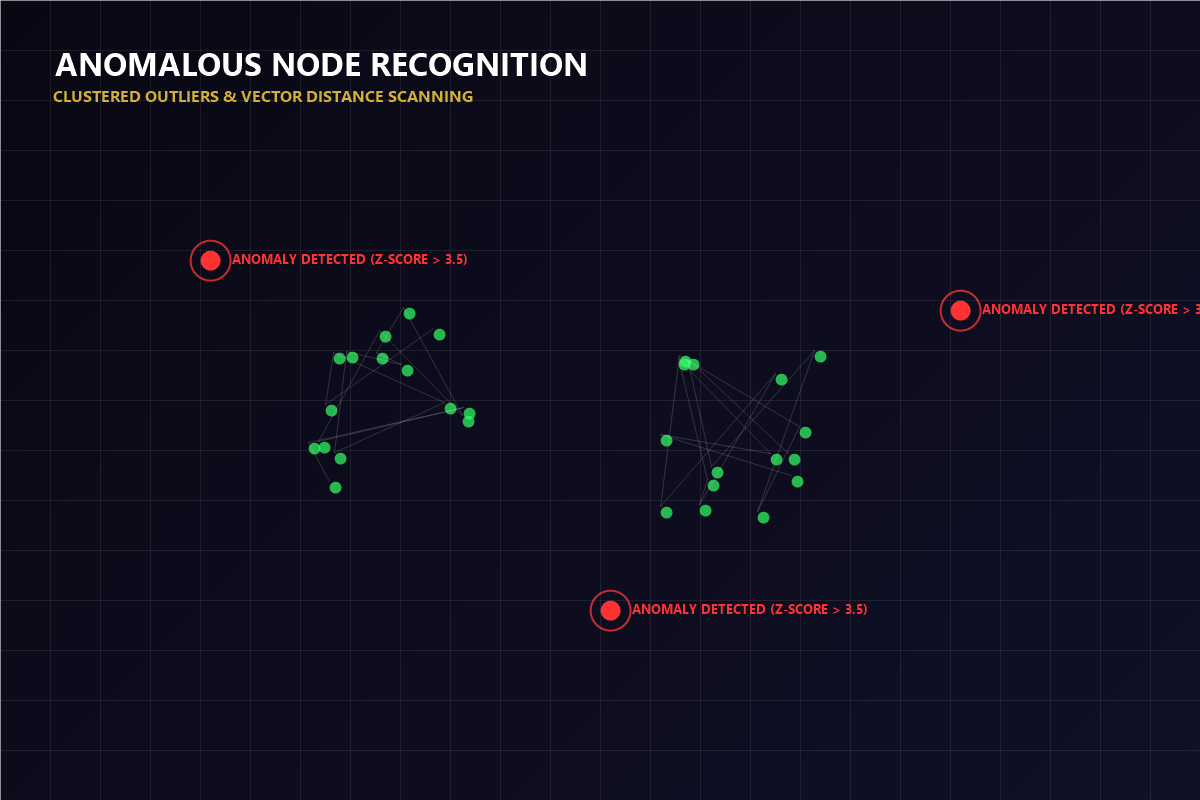
Converting raw data vectors into predictive insights requires a continuous, multi-tiered parsing pipeline.
Filtering raw streaming records, removing null inputs and sensor noise to establish a clean base of historical observations.
Selecting key mathematical variables and tracking cross-correlations to isolate core trend indicators from random database noise.
Deploying Z-score metrics and distance models to isolate structural outliers and issue active network notifications.
Recalculating forecast curves dynamically when incoming baseline parameters shift, preventing trend-drift error accumulation.
Our predictive models utilize structured cross-validation layers to guarantee drift-free decision metrics.
Selecting critical parameters from raw database tables, isolating structural trends from temporary noise signals.
Running models through historical testing intervals to eliminate parameter drift and model biases before deploying.
Detecting high-frequency outliers in server transaction logs, triggering immediate warning flags when metrics cross z-limits.
Configuring custom regression pipelines to trace nonlinear operational curves, matching capacity requirements to user demand.
Tracing hardware degradation characteristics to schedule physical servicing shutdowns, preventing catastrophic failures.
Updating statistical weights dynamically as newer operational events stream into database lake nodes, preserving forecasting accuracy.
Connect with our senior data architects to run a preliminary check of your operational datasets.
Request Data Audit